How to Transfer an Out-of-State Driver’s License to CT
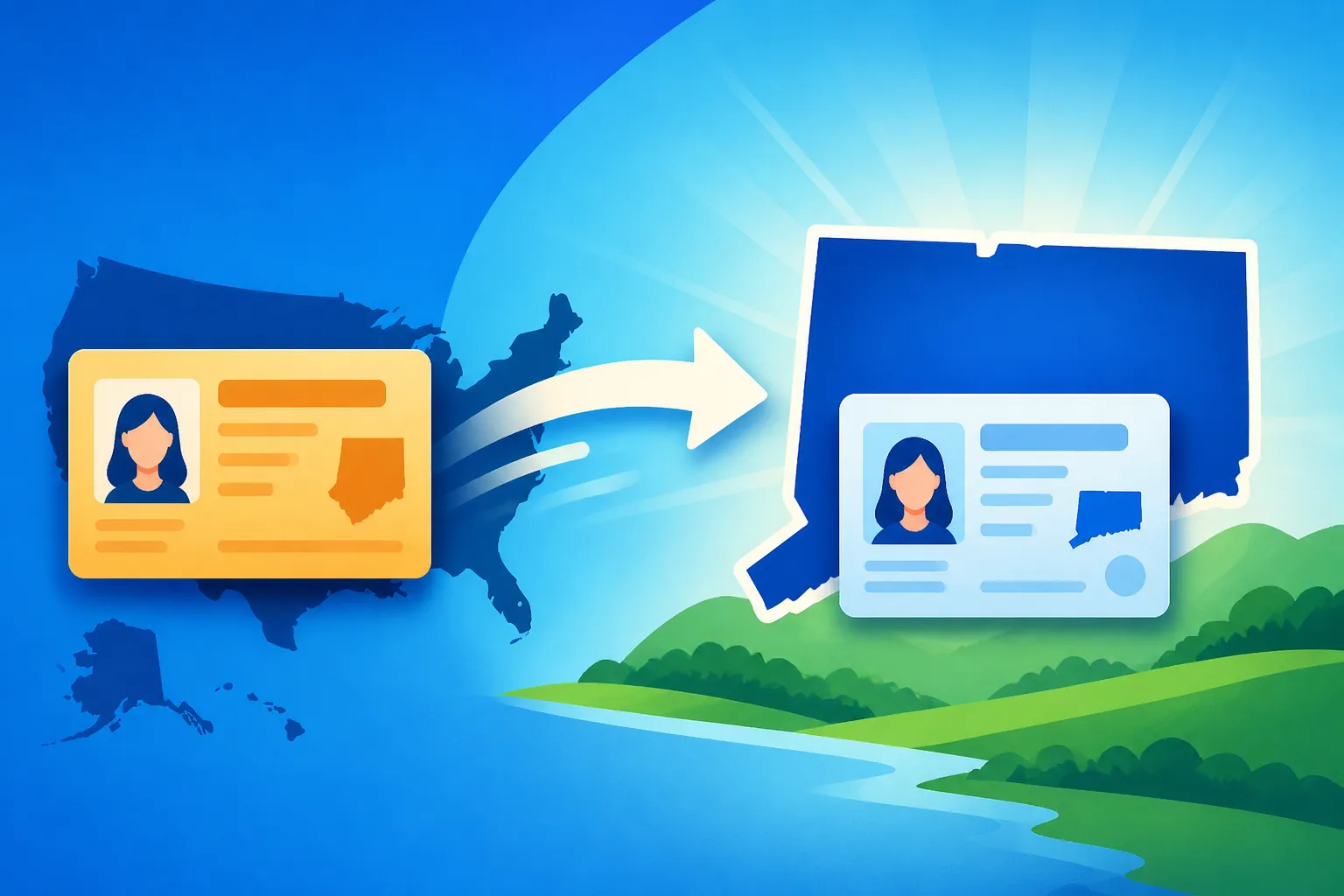
Moving to Connecticut means sorting out more than boxes and a new address. You also need to know when your out-of-state license stops being the right credential, what to bring to the DMV, and what happens at the appointment. This guide walks through the transfer process, flags questions to confirm before you go, and helps you plan for the mailed Connecticut license.
Know when you need to transfer your license
If you have established Connecticut residency and hold a driver’s license from another state, the state’s transfer process is the place to start. According to the Connecticut Department of Motor Vehicles, after establishing Connecticut residency, you have 90 days to transfer your license. The 90-day period is tied to establishing residency, so do not assume it starts when you first begin planning the move or when you happen to make your first DMV visit.
The transfer is an in-person process. It includes preparing your documents, completing Form R-229, paying the applicable fees, taking a vision test, and attending an in-person DMV appointment. Your new Connecticut license is mailed after the appointment rather than handed to you as a permanent card at the counter. According to the Connecticut Department of Motor Vehicles, your Connecticut license will be mailed within 20 business days.
Those details make timing worth planning early. You need to allow enough time to check your license status, gather acceptable identification, complete the application, and find an appointment. If you wait until close to the end of the transfer period to begin, an unavailable appointment or missing document could make the process harder to complete on time.
If your move also involves registering a car, treat the license transfer and vehicle paperwork as related but separate tasks. They may require different documents and appointments. For the vehicle side, see Moving to Connecticut: Transferring Out-of-State License and Plates and Combining Out-of-State License Transfer and Registration at DMV. For the broader order of tasks, Moving to Connecticut: Does Your License Transfer to the Same Class? can help you identify questions about what credential you may receive.
What the transfer does and does not tell you
A transfer is not simply a request to print your old license on a Connecticut card. The DMV must review your application and documents, and the type of Connecticut credential or driving privileges available to you may depend on your individual circumstances. The general transfer information does not answer every case-specific question, such as how an unusual license class, restriction, or record issue will be handled.
Use the transfer instructions as a starting point, not as a substitute for checking details that apply specifically to you. If your license has an endorsement, restriction, special condition, or other nonstandard feature, ask the Connecticut Department of Motor Vehicles how it will be evaluated before you attend. Do not assume that every feature on an out-of-state credential will be copied automatically.
The same caution applies if your license is not a standard driver’s license. A learner’s permit, a driving privilege card, or a commercial credential may follow a different process or require additional steps. The general out-of-state transfer instructions do not establish the rules for those situations. Start with the category that describes your actual credential and confirm the transfer route with the DMV.
Check your out-of-state license before you make plans
The condition of your existing license is one of the first things to check. According to the Connecticut Department of Motor Vehicles, make sure your out-of-state license is current or expired no more than two years. If your card is expired beyond that period, do not assume you can complete the standard transfer process. Ask the DMV what route applies to your record and whether testing or other steps may be required.
Look at the expiration date printed on the card, and check whether the license is valid and unrestricted in the state that issued it. If you have recently renewed it, make sure you can present the current credential or confirm what the DMV accepts if the physical card has not arrived. If you have lost the card, do not assume a photo or photocopy will be accepted in place of the original. Confirm the acceptable evidence directly with the Connecticut Department of Motor Vehicles before booking.
A license can also be affected by a suspension, revocation, cancellation, or unresolved record issue. A card in your wallet does not necessarily tell the whole story about your driving privileges. If you know of a past suspension, unpaid matter, or unresolved out-of-state issue, ask the DMV whether it could affect the transfer before you make an appointment. Do not wait until the counter visit to discover that the record needs attention first.
For a license that has been expired for a longer period, see Rules for Drivers Expired Over Two Years Transferring to Connecticut. If you are unsure whether an unresolved ticket or record could interfere, Will an Unresolved Out-of-State Ticket Block Your Connecticut License? covers that issue. These situations are different from a straightforward transfer, so it is useful to resolve the question before you build your plans around the standard process.
Your license class and endorsements need their own check
The class printed on your out-of-state license indicates what kinds of vehicles it authorizes you to drive. Endorsements and restrictions can further define what you may operate or under what conditions. If your credential includes anything beyond a typical passenger-car license, identify those details before you apply.
Do not assume that a Connecticut credential will match every class or endorsement on your old card. The DMV needs to determine how your out-of-state driving privileges correspond to Connecticut rules. If you drive a commercial vehicle, transport passengers, operate a motorcycle, or rely on a specialized endorsement for work, ask about the specific transfer requirements before scheduling a general license appointment.
These pages may help you identify which questions to ask: Understanding Connecticut Driver’s License Classes and Endorsements, When Is a Commercial Driver’s License Required in Connecticut?, and Transferring an Out-of-State Motorcycle Endorsement to Connecticut. They address different credential categories, so use the one that fits your license rather than assuming a standard Class D transfer will cover every privilege.
A class or endorsement issue can also affect your work schedule. If you need a specific credential to drive for your job, avoid relying on the assumption that the transfer will be completed in a single visit or that your existing privileges will automatically carry over. Confirm the steps and timing with the DMV, and plan for the possibility that the agency may need to review additional information.
Decide whether you are also seeking a REAL ID
A license transfer and the choice between a standard credential and a REAL ID are related but distinct decisions. If you want a REAL ID during the transfer, check the identity and residency documents required for that credential rather than assuming that the documents used for the basic transfer will be enough.
The transfer process requires acceptable identification, but the phrase does not mean that every personal document will qualify. The DMV’s current document list is the authority on what it accepts and whether the documents satisfy the requirements for the type of credential you want. Check that list before you set aside paperwork.
For help comparing credential types, see REAL ID vs Standard Connecticut License: Key Rules and Differences and Getting a Connecticut REAL ID While Transferring an Out-of-State Card. If you are still deciding whether REAL ID is necessary for your situation, Is a REAL ID Required to Get or Renew a Connecticut Driver’s License? can help you understand the choice. Make the decision early enough to gather the right documents, but verify the current requirements with the DMV before your visit.
Prepare your application and documents carefully
A successful appointment depends on arriving with the items the DMV needs to review. According to the Connecticut Department of Motor Vehicles, gather your out-of-state license, acceptable identification, completed Form R-229, and payment ($84 license fee and $40 application fee), then take a vision test and attend an in-person DMV appointment. Confirm the current instructions with the DMV before the visit, especially if your situation is not a standard transfer.
Gather the items the process calls for
Begin with the physical out-of-state license. Check that the information is readable and that the name and other details are consistent with your supporting documents. If you recently changed your name, or if your identity documents use different names, verify what evidence the DMV requires to connect those records.
Next, prepare acceptable identification. Do not guess which document combination is acceptable, or rely on a list you saved from an older transaction. The DMV’s current document guidance should determine what you bring. If you want a REAL ID, check the requirements for that credential as well, since the documents needed may differ from what you had in mind for a standard transfer.
Complete Form R-229 using the current version and follow its instructions. Review each entry before you leave home. An incomplete form or a mismatch between the application and your identity documents can slow down a transaction or require you to return with corrected information. If a question on the form does not fit your circumstances, confirm how to answer it with the DMV rather than guessing.
Plan how you will pay the required fees. The listed license fee and application fee are separate amounts, so do not combine them in your mental budget as if they were a single charge. Check the Connecticut Department of Motor Vehicles’ current payment instructions before the appointment. Payment methods can be transaction-specific, and the information available for your appointment should guide what you bring.
For a deeper document checklist, see Document Guidelines for First-Time Connecticut Driver Credentials and Connecticut DMV Proof of Residency: Required Documents and Rules. Those articles cover related document questions, but the DMV’s instructions for an out-of-state transfer should remain your final reference for what to submit.
Check consistency before your appointment
A quick document review at home can prevent avoidable problems. Compare the name on your out-of-state license with the name on your identity documents and Form R-229. Check that the address information you enter is accurate and that any supporting records are clear enough to review.
If your documents show different names, do not assume the discrepancy is harmless. A marriage, divorce, court order, or other legal change may require supporting evidence. The exact document the DMV accepts depends on your situation, so confirm the requirement before the appointment. If you need to update a Social Security record before a DMV transaction, see Updating Your Name With Social Security Before the Connecticut DMV.
Also check whether your identification documents are originals, certified records, or another form accepted by the DMV. A scan or photocopy may not meet an agency’s rules. The general transfer information does not specify every acceptable document or format, so use the current official list and ask if anything is unclear.
Make a personal checklist and tick off each item as you prepare it. Keep the documents together so you are less likely to leave one behind. If you are bringing paperwork for a REAL ID, keep it organized separately from the basic transfer materials, but bring everything the DMV’s current instructions require for your requested credential.
Schedule and attend the in-person DMV appointment
Once you have checked your eligibility and assembled the paperwork, arrange an in-person appointment through the Connecticut Department of Motor Vehicles. The transfer instructions call for an in-person visit, so do not assume that an online transaction or a partner desk can complete your specific transfer. Confirm the available service and location through the official DMV appointment system or office locator.
Choose the appointment category that best matches your transaction. If the online scheduling options are unclear, read the descriptions carefully and check the DMV’s guidance rather than selecting a category that merely sounds similar. You may find How to Choose the Right Appointment Type on Connecticut DMV Online and Booking Your Connecticut DMV Slot: Navigating the Appointment Portal useful when preparing to schedule.
Before you reserve a time, check whether the chosen office handles the transfer service you need. Not every location necessarily provides every service, and your appointment confirmation should match the transaction. Use the official office locator to verify the location and its current hours. Avoid relying on older notes, map listings, or assumptions about what a particular office offers.
What to do before you leave
Read the appointment instructions again shortly before the visit. Make sure you have the out-of-state license, acceptable identification, completed Form R-229, and the payment method specified by the DMV. If you are requesting a REAL ID or transferring a specialized credential, include any additional material the agency says is required for your case.
Allow time to arrive and check in according to the appointment instructions. If the office has a check-in process, follow the directions in your confirmation. Keep your paperwork accessible instead of buried in a bag or car. A clear, orderly presentation makes it easier to respond if the clerk asks you to show a particular document.
If you discover that something is missing, do not try to substitute an unconfirmed document and hope it will work. Contact the DMV or consult its current guidance before attending if there is time to resolve the issue. If you must change the appointment, use the official system and follow its current rescheduling rules. For planning a desk visit generally, Guide to Booking and Preparing for Connecticut In-Person DMV Visits offers additional preparation tips.
What happens at the visit
The in-person appointment is where the DMV reviews your application and documents and administers the required vision test. Be ready to answer questions about your existing license and the credential you are requesting. The agency may need to clarify details that are not obvious from your paperwork, so answer accurately and explain any unusual circumstance instead of trying to fit it into a standard case.
The vision test is part of the transfer process described by the DMV. If you have a vision condition, use corrective lenses, or have a restriction on your existing license, ask the DMV ahead of time whether there is anything you should bring or do to prepare. Do not assume that a prior screening in another state replaces the Connecticut vision test.
After the DMV completes its review, follow the instructions you receive at the appointment. Keep any transaction receipt or temporary documentation provided by the agency, and read it carefully. Do not assume it grants driving privileges beyond what the document expressly says. If you have a question about whether you may drive while waiting for the mailed card, ask the DMV before leaving or consult the written instructions it provides.
Understand testing, credential choices, and unusual cases
The standard transfer information identifies a vision test and an in-person appointment. It does not answer every possible question about road testing, knowledge testing, specialized endorsements, or a driving record. Avoid treating a general transfer checklist as a guarantee that no additional step will apply to you.
Do not assume your old testing history settles every requirement
A person transferring a current license may want to know whether the DMV will require a road test or knowledge test. The facts provided for the standard transfer process do not specify when either test is required. Because testing can depend on the license status and individual circumstances, confirm your own requirements with the Connecticut Department of Motor Vehicles before scheduling.
This is particularly important if your license is expired beyond the stated transfer window, if it comes from outside the United States, if it is a permit rather than a full license, or if the license class and endorsements are specialized. The process for each of these situations may differ from the ordinary transfer. For a specific comparison of possible testing issues, see Transferring an Out-of-State License to CT: Vision Test vs Road Test. For licenses issued outside the country, Rules for Transferring Out-of-Country Licenses to Connecticut is more relevant than the standard state-to-state transfer process.
If the DMV tells you that testing is required, ask what type of test applies, how to schedule it, what documents to bring, and whether the appointment you already made covers the test or only the application. Do not book a road test or purchase training based only on a general assumption. Get the instructions that match your record and credential.
When a refresher may help
A license transfer is an administrative process, but moving can change the roads you use, your commute, or your comfort behind the wheel. If you have been away from driving or want to refresh general road knowledge, a course from a provider such as I Drive Safely may be useful for personal preparation. It does not replace the DMV’s transfer application, vision test, appointment, or any testing the agency specifically requires.
A refresher is optional preparation, not proof of eligibility. Do not pay for a course in the belief that it will automatically satisfy a Connecticut transfer requirement unless the DMV confirms that it applies to your situation. If testing is required, use the official instructions to identify accepted preparation or course requirements.
After the appointment: mailing and follow-up
The permanent Connecticut license is mailed after the DMV processes the transfer. According to the Connecticut Department of Motor Vehicles, your Connecticut license will be mailed within 20 business days. Treat that as the agency’s stated mailing timeframe, not as a reason to discard your appointment paperwork or assume that every mail issue has been ruled out.
Make sure the address on your application is accurate and that you can receive mail there. If you are moving again soon, or if you rely on another person’s mailbox, ask the DMV how to handle delivery before you submit the application. Forwarded mail, a name mismatch on the mailbox, or an incomplete address can complicate delivery even after the application itself is processed.
Keep any temporary document or receipt the DMV gives you until the permanent card arrives. Follow the directions printed on it, including any limits on use or expiration. If you are unsure whether it authorizes you to drive, contact the DMV for clarification rather than relying on informal advice.
If the card does not arrive within the timeframe provided, use the Connecticut Department of Motor Vehicles’ official credential-delivery guidance to find out what to do next. Confirm that the agency has the correct mailing address and ask whether the license has been issued or mailed. The process for a transfer is not necessarily identical to replacing a lost card, so do not start a duplicate-card transaction unless the DMV tells you that is the right step.
If you receive a credential with an error, compare it with the information on your application and the documents the DMV reviewed. Contact the agency about correcting the problem. Do not make alterations to the card or continue to rely on incorrect information if the mistake affects your identity or driving privileges.
For delivery questions, Tracking Your Connecticut Driver’s License or ID in the Mail and Driving While Waiting for Your Connecticut License Card in the Mail may help you identify the right follow-up question. If the transfer has not been completed and you need to understand the status of your driving privileges, see How to Check Your Connecticut Driver’s License Status Online. Use the official DMV service for account or transaction information.
Common planning mistakes to avoid
A transfer can be straightforward when the documents and license status are in order, but small assumptions can create delays. Use this checklist to catch common problems before your appointment.
| Planning issue | Why it matters | Practical next step |
|---|---|---|
| Waiting too long to begin | The transfer period begins after establishing Connecticut residency, and you need time to prepare and attend in person. | Start checking eligibility, documents, and appointment availability early. |
| Assuming an expired license is transferable | The standard process has a limit on how long the out-of-state license may have been expired. | Check the expiration date and ask the DMV about your route if it falls outside the stated limit. |
| Bringing an unverified substitute for the license | The general instructions call for the out-of-state license; they do not say every alternative will be accepted. | Ask the DMV what it accepts if the card is lost, damaged, or unavailable. |
| Guessing which identity documents qualify | “Acceptable identification” is determined by the DMV’s current requirements. | Use the official document list for your credential choice. |
| Forgetting Form R-229 | The transfer process calls for a completed application. | Obtain the current form, complete it carefully, and bring it to the visit. |
| Treating the fees as one combined charge | The license fee and application fee are listed separately. | Check the current payment instructions and bring an accepted payment method. |
| Assuming a standard transfer covers endorsements | Commercial, passenger, motorcycle, or restricted privileges may need a separate review. | Identify every class and endorsement on your current license and ask how each will be handled. |
| Assuming your appointment covers every possible test | The standard process describes a vision test, but does not settle every testing question. | Ask whether your circumstances require additional testing and how to schedule it. |
| Using an old appointment or document checklist | Requirements and service availability can change. | Review current DMV instructions shortly before the appointment. |
| Forgetting to check the mailing address | The Connecticut license is mailed after processing. | Confirm that the address on the application is complete and can receive the card. |
One more common mistake is assuming that an online service or a private service provider can complete an official license transfer on your behalf. The application, appointment, testing, payment, and credential issuance are handled through the Connecticut Department of Motor Vehicles. Use the agency’s current instructions to complete each official step.
If you are also handling a vehicle registration, keep the documents for each transaction organized separately. A transfer appointment should not be assumed to complete registration, title, tax, inspection, or plate requirements. For help with the vehicle side, see Registering a Motor Vehicle in Connecticut: Complete Guide. If you are still sorting out the address on a license and registration, Updating Your Connecticut License and Registration Address Together may help you plan those changes.
Frequently Asked Questions
How long do I have to transfer an out-of-state license after moving?
According to the Connecticut Department of Motor Vehicles, after establishing Connecticut residency, you have 90 days to transfer your license. Start preparing early so you have time to check your documents and attend an in-person appointment.
Can I transfer a license that has expired?
According to the Connecticut Department of Motor Vehicles, make sure your out-of-state license is current or expired no more than two years. If it has been expired longer, ask the DMV what process applies to your situation.
What should I bring to the DMV?
According to the Connecticut Department of Motor Vehicles, gather your out-of-state license, acceptable identification, completed Form R-229, and payment. Check the agency’s current instructions for document and payment details before the appointment.
Is a vision test part of the transfer?
Yes. The Connecticut Department of Motor Vehicles lists a vision test as part of the transfer process. Ask the agency whether your specific circumstances require anything additional.
When will my Connecticut license arrive?
According to the Connecticut Department of Motor Vehicles, your Connecticut license will be mailed within 20 business days. Check that your mailing address is accurate and keep any appointment paperwork until the card arrives.
Sources
- Connecticut Department of Motor Vehicles — Transfer Your Out-of-State-License to CT (checked November 12, 2026)
Disclaimer
This article is for general informational purposes only and does not constitute professional advice. Laws, prices and regulations vary by location and change over time. Consult a qualified professional for guidance on your specific situation. Connecticut Driver Guide is not a government agency and is not affiliated with any state motor vehicle department.